
Marketing in an Attention Economy: Perspectives versus Perceptions
Today, many people have had their natural curiosity muted by sensory overload. With the growth of information inundation and AI-led algorithms, you don’t have to seek news. It comes flying at you, with a split second to decide what to accept or ignore. This has all but eliminated the human act of exploration so critical to making decisions.
So how does a business target their distracted, 21st-century audience? First, look at how people come to develop their beliefs and tastes. This requires an understanding of perspective and perception, and how one influences the other.
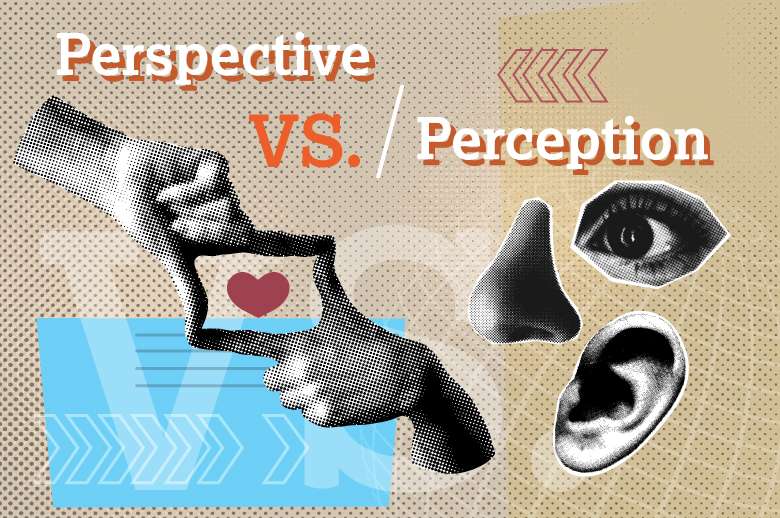
Perception is the ability to see, hear or become aware of something through one’s senses, which are filtered through a mix of attitudes and values. We cannot bypass our beliefs, so they necessarily affect how we perceive meaning from a situation. If you have a great service experience, whether at a restaurant or from a repair technician, you will continue using that service or product because you perceive its value.
We form strong opinions based on the real-world experience we have with a person or service. And those embedded perceptions are just that, embedded. They are very difficult to change, so challenging someone’s perceptions is usually futile. People know exactly why they value what they value.
Perspective is the way we see something, that is, from our point of view. Yet we are able, and often actively try, to alter our perspective. “Keep things in perspective” means to look at the whole picture, to logically assess a situation before we react. Now, to confuse things further, remember that our perspectives are a product of our perceptions, but those perspectives can also become a feedback interruption that affects perception.
Stay with me on this one. Changing your perspective of a situation is the most effective (and perhaps the only) way to change your perception. This is an important rule to abide by in preparing any marketing campaign. If you want to influence your market, do not aim to “fix” people’s perceptions. Instead, shift their perspective.
A simple real-world example is traffic. Say you are headed to an important meeting and another driver suddenly cuts in front of you. Your immediate perception might be, “That driver is careless and rude.” This interpretation comes from what just happened, how you felt and perhaps your past experiences with aggressive drivers. Then, at the next intersection, you see that same car pull into the emergency entrance of a hospital. Now your perspective might become: “That move was still reckless, but obviously there’s an emergency that requires getting to the hospital as soon as possible.”
The initial event did not change. The driver still cut you off. You perceived that action and assigned it meaning. Then your perspective of the event changed once you had more information. For many people, that change in perspective will even color how they recall their perception of the initial event. Was the driver really so reckless? Maybe their vehicle didn’t really get that close to you. Here’s a Psychology Today article on the powerful impact perspective has on our outlook and decision-making process.
The bottom line is that perspective can change more easily than perception, and it has to change first. Our existing perceptions affect our perspective, but new perspective can expose us to information that changes perception. Empathy helps open up one’s perspective on any given situation, which is why empathy is the foremost consideration in any marketing plan.
Marketing today is more complicated than crafting a good message. In an attention economy, most decisions happen before a viewer has consciously considered the message itself. People scroll past oceans of content before breakfast.
The question has become, “Where and when can people be interrupted by something new that might change their perspective?”
A marketing firm can help answer that. Any business naturally views its product or service from the inside. Business owners already know their offerings, their history, the work involved and the reasons people should care.
The market does not share their perspective, at least not yet.
A good marketing firm helps you look at your business from the perspective of people who have never heard of you, who have yet to give you their valuable attention or the chance to change their perspective and foster their curiosity.
You can’t force attention. Instead, you’re looking for an opportunity to expand perspective and shift perception of the value of a service or product.
The most rewarding response to good marketing isn’t, “You convinced me.” It may simply be, “I never thought of it that way.”