
How can you integrate AI and keep your clients’ trust?
AI should help your brand, not hurt it
If you are moving toward AI efficiency and want to maintain the trust your clients have invested in you, it’s imperative to keep your messaging clear and based on empathy. The best solution is to utilize AI for tasks where it makes sense, while keeping human touch points where necessary.
AI-generated copy does not equal thoughtful marketing. Consumers are becoming hypersensitive to whether they are reading words crafted by humans or spat out by robots. This creates a problem for anyone who wants their message to resonate, whether they are using AI or not. We now live in a media landscape where everything is suspected to be AI-generated until proven otherwise. Have you heard the trending abbreviation “AI;dr," or “AI, didn’t read.”
Be honest, as you read this, are you wondering if we just plugged in keywords and had some gen AI platform spit out 500 words designed to sound “businessey” while saying nothing? (We didn’t, by the way, this blog was 100% organically written by a human’s wet, gloppy brain).
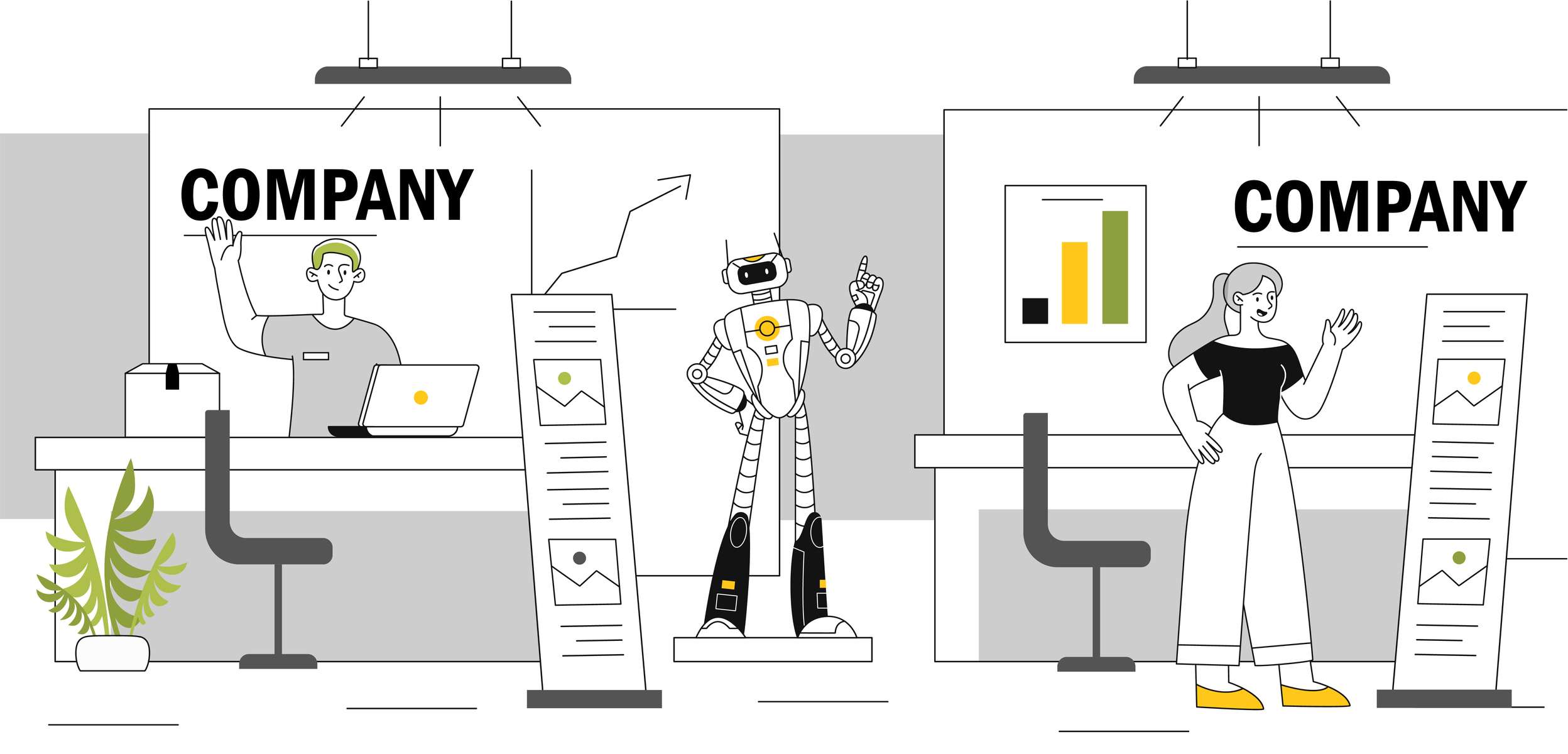
Let’s recount a tale of two companies. These are real examples an Imagine team member witnessed recently.
One company, let’s call them Company A, set up a booth advertising their trade-specific AI platform at a trade show. An AI-generated spokesmodel looped on a video screen, describing how Company A would help business owners leverage their reputations, create impact and gain an edge over competitors. Attendees began to whisper about how the (obviously) AI-generated spiel was empty buzzword salad. To make matters worse, the overly loud audio track was not synced up to the video, giving the appearance of AI slop paired with glitchy hardware. Not exactly a chocolate-meets-peanut-butter combo.
While most booths stayed busy at this trade show, the gentleman with the AI spokesperson sat bored. No one trusted him or the services he was offering.
Meanwhile, at another trade convention, Company B was showcasing their AI-assisted estimating services. They had a staff of friendly, knowledgeable salespeople who were running demos and answering questions. They demystified the process and let potential clients know the many touch points where their AI was checked by a human with the appropriate expertise. Attendees were drawn in, eager to hear how the system worked and what kind of savings they could expect as they integrated it. As booth staff gave demo after demo, more passers-by lingered and took information.
These two trade shows were remarkably similar, catering to business owners who had worked their way up in a blue-collar trade before creating their own companies. Most were over 50, and they knew their trade backwards and forwards — but AI was a new, scary tool they had no instruction manual for.
Company B thought strategically and with empathy for their market. They started with low-pressure education (presented by humans!) and understood where their potential clients were coming from. They addressed the worries their clients had about handing over important work to an unfamiliar system. After a year and three trade shows, Company B steadily expanded and is now handling billions of dollars in projects.
Ironically, Company A’s leaders probably thought they were saving a bunch of money by just feeding prompts into AI to create the messaging they brought to a trade show. Yet potential customers avoided their booth like it was kryptonite.
As the percentage of slop out there increases, it becomes even more important to put thought and empathy into your core messaging. Give us a call and one of our gloppy-brained humans can help you shape your message.